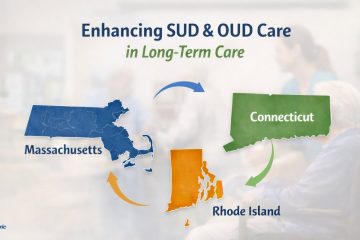
As SAMHSA kicks off Substance Use Disorder (SUD) Treatment Month, it’s a timely reminder that recovery-informed care belongs in every care setting, including long-term care (LTC).
Long-term care teams are increasingly caring for residents living with OUD and other SUDs, but many facilities still face real barriers. Limited training, stigma, and a lack of practical tools and technical assistance can make it harder to provide consistent, evidence-informed care. Strengthening capacity in LTC is essential to ensuring residents receive respectful, person-centered support.
Across Connecticut, Massachusetts, and Rhode Island, Healthcentric Advisors is partnering with state and community leaders to address these challenges by providing training, practical resources, and hands-on assistance to long-term care teams.
One mission, three states
While each state initiative is unique, our work is grounded in the same goal: helping LTC teams feel confident and prepared to support residents with SUD with dignity and evidence-informed care. Across these efforts, we focus on:
- Workforce training and development that builds practical skills and reduces stigma
- Technical assistance and tailored support to help facilities apply best practices in real-world settings
- Curated tools and resources designed for day-to-day use
- Collaboration across the continuum of care to strengthen connections and reduce fragmentation
Massachusetts: Supporting long-term care facilities statewide
In Massachusetts, the Massachusetts Department of Public Health has awarded funding to Healthcentric Advisors to lead a statewide initiative to improve care for residents with SUD in long-term care (LTC) settings. In collaboration with Alliant Health Solutions and with clinical guidance from Rossana Lau-Ng, MD, MBA, CMD, a geriatric physician at Boston Medical Center, this 27-month effort is equipping nursing homes and rest homes with the knowledge, tools, and guidance needed to deliver compassionate, person-centered care.
This initiative supports facilities across Massachusetts through on-site training and technical assistance, targeted quarterly educational sessions, and annual community forums in eight regions to promote cross-continuum collaboration. The project also includes redesigned best-practice resources for day-to-day use, along with a unique storytelling partnership with StoryCorps to elevate the voices of residents and families.
Rhode Island: Workforce training and facility support
In Rhode Island, Healthcentric Advisors is supporting SUD care in LTC through two complementary efforts, one centered on workforce development and one aimed at strengthening facility readiness and consistent practice.
Skilled to Support: Equipping Rhode Island Nursing Home Staff for Substance Use Care is a six-month workforce development program funded by the RI Department of Labor and Training. Through assessment, training, and tailored support, up to 50 staff will build the knowledge and skills needed to deliver compassionate care for people experiencing substance use disorder. The program includes work-based learning that builds practical, on-the-job skills and helps translate learning into daily practice.
In addition, the Rhode Island Nursing Home Recovery-Ready OUD Initiative builds on Skilled to Support by shifting from individual learning to facility-level change. Supported by the Rhode Island Foundation through the state’s Opioid Settlement Agreement, this initiative brings partners together to strengthen the systems that make high-quality OUD care possible, including consistent protocols, smoother transitions, continuity of medication for OUD (MOUD), and stigma-free, person-centered practices.
Connecticut: Developing SUD Champions to drive change within facilities
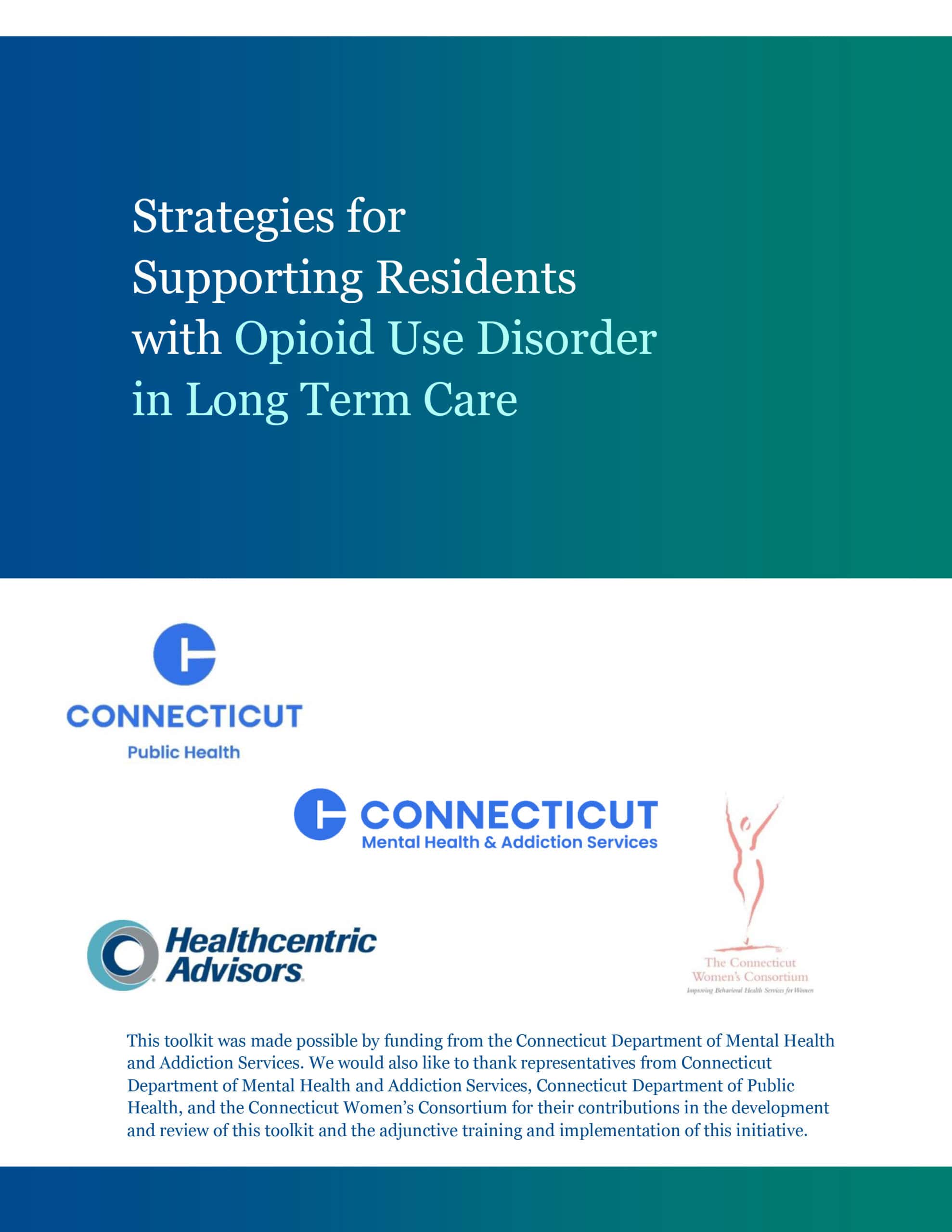
In Connecticut, Healthcentric Advisors has partnered with the Connecticut Department of Mental Health and Addiction Services (DMHAS) and the Connecticut Department of Public Health (DPH) to develop practical tools to support long-term care facilities caring for residents with OUD, including the resource guide Strategies for Supporting Residents with Opioid Use Disorder in Long Term Care and related online learning modules. Building on that foundation, new work is underway to train SUD Champions from approximately 30 nursing homes. The program will also include on-site and virtual training to support broader facility teams.
Building on that foundation, new work is underway to train SUD Champions from approximately 30 nursing homes. The program will also include on-site and virtual training to support broader facility teams.
Looking ahead
We’re grateful to our partners and to the long-term care staff who show up every day to provide compassionate care—often while navigating complex challenges and limited resources. During SUD Treatment Month, we recognize that progress is built through practical support: training that sticks, tools teams can use, and technical assistance that helps turn best practices into routine care. Healthcentric Advisors will continue advancing this work in CT, MA, and RI, and we hope to build on these partnerships to expand to additional states—so more facilities feel equipped to admit, support, and care for residents living with SUD.
If you are interested in bringing similar long-term care training and technical assistance to your state or organization, we’d be happy to share lessons learned from our work in CT, MA, and RI. Please reach out to us at: [email protected]